
Parental Burnout
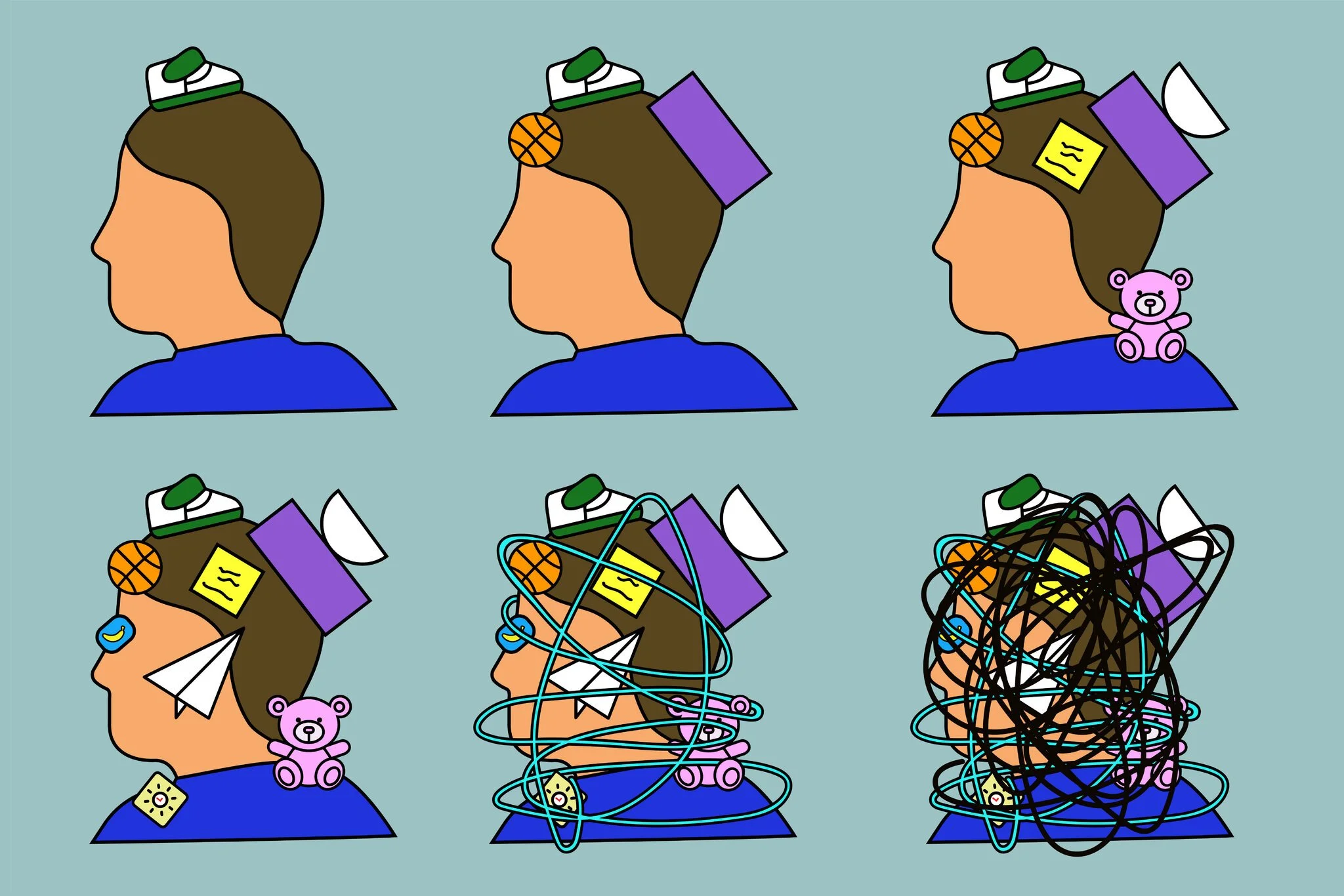
When people talk about parenthood, words like natural, joyful, and rewarding often come up, almost as if parenting should feel like a smooth and expected “rite of passage.” While that may be true for some families, the reality is often much more complex. Raising children while balancing everyday responsibilities can feel exhausting, overwhelming, and deeply meaningful all at once.
Parental burnout is more common than many people realize, especially when the pressure to constantly “do it all” never seems to stop. It is possible to deeply love your child while also feeling completely worn down. When parenting feels heavy, it is not a sign that you are failing; it may simply reflect how much you are carrying. Needing support, rest, or time to care for yourself does not make you any less of a parent; it makes you human.
What is parental burnout?
Parenting stress is normal and expected. However, when chronic stress and exhaustion occur that overwhelm a parent’s ability to cope and function, it is called parental burnout. Burnout, in general, is characterized by “emotional exhaustion, depersonalization and a decrease in self-fulfillment” as a result of chronic exposure to emotionally draining environments (Rionda, I. S., et al., International Journal of Environmental Research and Public Health, Vol. 18, No. 9, 2021). These environments do not have to be a singular place, it can be a culmination of things. Going to a stressful job, and then potentially coming back home to multiple young kids, pets, and even your partner can be incredibly overwhelming. If you feel as though you’re in survival mode, you’re completely worn out and struggling to enjoy being with your children, know that you’re not alone. The mental load of parenting is real, and parental stress has even recently been flagged as a public health concern from the U.S. Surgeon General.
How many other parents experience it?
While many people may not talk about it, more than half of parents experience parental burnout. A survey from the American Psychological Association in 2023 found that:
41% of parents feel stressed most days
48% say some days they’re so stressed they simply can’t function
If these feelings sound familiar, know that you are not the only one. No matter who you are, no person is meant to juggle full-time work, childcare, school schedules, and emotional labor all at once. In order to do all those things and more, you need a support system. Even then, that still may not be enough.
Why does it happen?
Often, we want to find the root of a problem and fix it quickly. But when it comes to parental burnout, things are rarely that straightforward. Many of the biggest stressors, like work schedules or the number of children in the home, aren’t easy to change overnight. Still, understanding what contributes to burnout can help parents recognize where it’s coming from and identify small areas where support, balance, or adjustments may be possible.
Full-time working parents are more likely to feel emotionally exhausted than those working part-time. Did you know that 65% of working parents experience burnout?
How do I know if I’m burnt out?
Burnout can show up in ways that are easy to ignore or dismiss and are oftentimes chalked up to normal parenthood. Feeling extreme fatigue, depleted, or completely overexerted are all symptoms. It also isn’t uncommon for parents to describe feeling ‘worn out’ or ‘not being able to take it anymore’. Here are some symptoms to look out for and acknowledge, not just brush off.
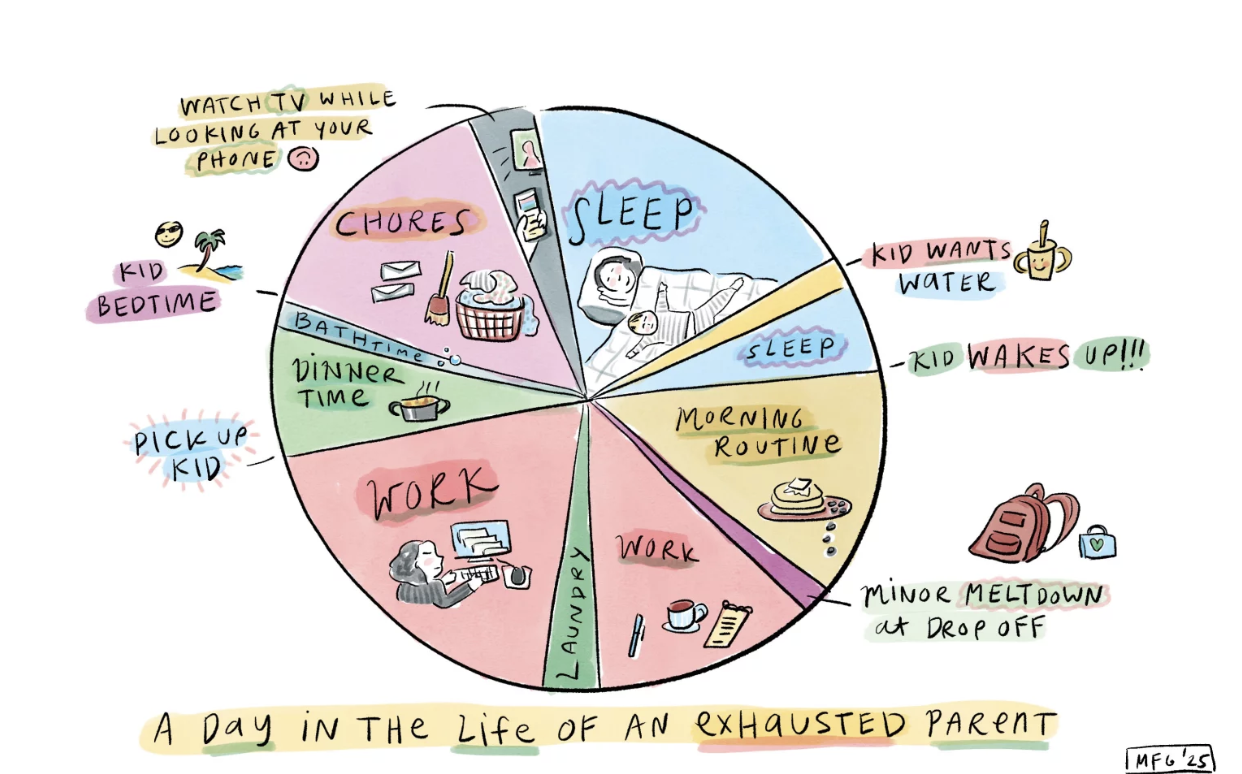
A sense of emotional detachment from your kids can frequently be suppressed or trigger parental guilt, which often prevents you from acknowledging those feelings. Yet, this isn’t something to feel ashamed of, much less guilty of. Many parents describe it as just going through the motions of everyday life, or being physically there but mentally absent. As a result, burnout can make it difficult to enjoy being around your kids and to show them affection and love.
Loneliness, guilt, and isolation often accompany emotional detachment. When you lack the energy to recharge and feel ashamed of your struggles, it becomes harder to reach out for the support you deserve.
A sense of incompetence is another common symptom of parental burnout. It can manifest as feelings of underperformance, where you struggle to meet an idealized standard of the “perfect parent” or feel disconnected from who you were before. This may lead to a diminished sense of productivity or accomplishment, ultimately eroding your confidence and the joy you once found in parenting.
Parental burnout can also show up physically, not just mentally. Common symptoms may include headaches, persistent tiredness, and dizziness. For example, it may be when you anticipate the day ahead and feel such exhaustion that it leads to you feeling physically fatigued. Other physical signs include chronic tiredness, mood swings, sleep disturbances, and a weakened immune system, leaving you more susceptible to illness.
How is parent burnout different from postnatal depression?
Trying to untangle the two can be incredibly confusing because the symptoms overlap significantly. While postnatal depression is a common, treatable depression that starts either during or after childbirth (more information on the signs and symptoms here), parental burnout is different. One example is the difference in how they’re treated. The primary treatment for burnout often involves practical, systemic changes to reduce stressors and increase resources. The treatment for postnatal depression, while including those elements, may also require a deeper therapeutic focus on mood and brain chemistry and can include adding medication.
Another difference is that parental burnout is context-specific. This means that the overwhelming exhaustion, detachment, and feelings of failure are directly and exclusively tied to your role as a parent. So, while you may be able to go out and have fun with your friends, or go to work and feel engaged, as soon as you step into the role of a parent, the feeling of depletion comes rushing back. At its core, parental burnout is feeling depleted. It is the feeling of having nothing left to give. Again, this can lead to the coping mechanism of emotional distancing, where you detach to protect your last reserves of energy. It is a response to a situation that has become unsustainable.
Postnatal depression, on the other hand, is all-encompassing and is a global mood disorder. The feelings of depletion, sadness, and hopelessness are not confined to parenting. It affects every or most aspects of your life. Some people may even describe it as having a “cloud” following them everywhere they go. It doesn’t matter where you are or who you are with; the cloud of depression follows you to work, out with friends, and into your quiet moments alone. There is no "escape" from the feeling because it is an internal state, not a reaction to a specific context, like parenting. This is even true in situations where the internal struggle is constant, even if the external performance seems fine. More information on postnatal depression can be found here as well.
How can I manage my parental burnout?
If these feelings resonate with you, remember that you are far from alone in this journey. Support is within reach, and you deserve to have your struggles heard and validated. Seeking assistance early on can be a vital step in finding balance and may help keep this intense exhaustion from evolving into depression. Managing burnout often involves several supportive approaches, such as:

Self-care.
You might roll your eyes when you read this, but making time for yourself isn't optional; it’s actually foundational. Even a five- to ten-minute recovery break a couple of times a day to enhance your well-being or engage in something that brings you joy does wonders (e.g., drink a warm beverage slowly; do a five-minute meditation; get some physical activity, such as dancing to your favorite music or walking up and down the stairs). Self-care isn’t just taking an entire spa day (even though that is a great activity to do for yourself!), it’s about making realistic, everyday, small choices for yourself. While making time for yourself includes making time for your own hobbies and interests, it also includes addressing sleep. Disrupted sleep can have a larger impact on your mental health than you may realize, and making a nighttime routine can help with sleep. Taking a warm bath or avoiding caffeine 6-8 hours before bed are great ways to start.
Be kind to yourself and manage your expectations.
As doulas and humans, we know that no one is perfect. We are bound to “mess up” at one point or another, and that’s okay! Parents all make mistakes, yet we carry guilt about the past and worry about the future. While valid, these feelings of guilt and worry are counterproductive. Instead, be confident in the fact that no parent is perfect. Similarly, while easier said than done, don’t set expectations too high. It may seem easy at the moment to commit to everything, but don’t feel guilty for having to say “no” to something or backing out of a commitment sometimes. Instead of pursuing perfection, try to be mindful and stay in the present moment. Think about the things that are important to you and your children right now and prioritize those things.
Open up to others.
Whether it’s a friend, your partner, therapist, or another trusted support system, talking about your feelings and experiences is healing. Always remember that there is strength in vulnerability, and you may even find that others are going through similar emotions as well. Sharing your emotions can be the first step toward relief, and it’s worth exploring.
Reflect, then act on your priorities.
Regularly checking in with what truly matters most for your family helps you understand if your current actions match your intentions. When things feel out of sync, it may be an invitation to gently pivot and re-center your daily life around those core priorities.
Get Curious About What’s Beneath the Stress.
Sometimes burnout is really about deeper feelings of inadequacy or self-blame. It’s important to identify those negative thoughts that come into your mind and gently challenge them. Why are you feeling this way? Would you ever say those words to someone you love? To add to that, building your mental resiliency and coping skills can aid in becoming kinder to yourself and redirecting your thoughts. This can include practicing mindfulness, developing cognitive-behavioral skills, practicing gratitude/self-affirmations, and deep abdominal breathing.
Ask for help.
Sometimes, self-care, positive affirmations, or reflection aren’t enough. If your level of burnout, anxiety, and/or depressive symptoms is interfering with your ability to function in everyday life, talk to your provider about different options for you. It is a strength to recognize when we need help, not a weakness!
All in all..
Navigating the path back to your true self involves exploring various supportive strategies that feel right for you. If none of these solutions resonate with you, trust your intuition! You are the expert on your own needs, and there are countless ways to begin easing the weight of burnout. Starting small, like opening up to a trusted friend or taking just five minutes of peace for yourself once a day, can make a meaningful difference. It’s important to remember, however, that you are far from alone. Many other parents are walking this same complex journey alongside you, and there are always resources.
References
Centre of Perinatal Excellence. (n.d.). Parental burnout. COPE. https://www.cope.org.au/new-parents/looking-after-yourself/parental-burnout
Memorial Healthcare System. (2025, April). Understanding and managing parental burnout. https://www.mhs.net/blog/2025/04/understanding-and-managing-parental-burnout
Mikolajczak, M., Roskam, I., & Brianda, M. E. (2024). Parental burnout: A growing public health concern. American Journal of Public Health, 114(11), 1181–1183. https://doi.org/10.2105/AJPH.2024.307802
Phoenix Health. (n.d.). Parental burnout vs. postpartum depression. https://joinphoenixhealth.com/resourcecenter/parental-burnout-vs-postpartum-depression/
The Ohio State University College of Social Work. (2022). Parental burnout report. https://wellness.osu.edu/sites/default/files/documents/2022/05/OCWO_ParentalBurnout_3674200_Report_FINAL.pdf
The Ohio State University Office of Student Life. (n.d.). Parent burnout. https://wellness.osu.edu/resources/parent-burnout