
Birth Control Post-Pregnancy

(JLco) Julia Amaral - stock.adobe.com
Do I need Birth Control Post-Pregnancy?
While this may be the last thing that you’d like to think about right now, you and your partner will have more time to consider what you want before the baby arrives. We know the postpartum period brings significant physical and emotional adjustments for many people. Choosing a contraceptive method after childbirth involves considering several health-related factors, including breastfeeding status, hormonal changes, and future reproductive goals. Whether you know this was your last pregnancy, hope to have more children later, or remain uncertain, discussing birth control options after delivery is an important part of postpartum care regardless of your plans.
Why is postpartum birth control recommended?
This choice isn't always easy, but understanding your choices and discussing your goals with your OB/midwife can really be helpful. For example, if you’re not using birth control after having a baby, pregnancy can happen sooner than expected. Hence the term “Irish twins,” which refers to siblings born close together in age. While some families are excited to grow their family quickly, others may prefer more time between pregnancies to recover and adjust to life with a new baby. Many healthcare experts recommend waiting about 18 months between pregnancies to support both maternal and infant health.
Did you know that one of the reasons pregnancy can happen unexpectedly postpartum is because ovulation often returns before your first period? Since ovulation typically happens about two weeks before menstruation, it is possible to become pregnant without realizing fertility has returned yet. According to the American College of Obstetricians and Gynecologists (ACOG), breastfeeding may delay ovulation for some women, although it often returns around six months. For women who are not breastfeeding, ovulation can return within just a few weeks after giving birth. Many women who are exclusively breastfeeding with no supplements often have a higher likelihood of delayed menstruation compared to those not breastfeeding or using supplements. It is important to note, however, that this timeline is very dependent on the type and amount of breastfeeding. Because everyone’s body recovers differently, talking with your provider about postpartum contraception can help you choose an option that fits your goals and timeline.
When should I choose a postpartum birth control method?
As doulas, we know that you will be counseled by your OB/MD/midwife at your 6 week appointment (sometimes in pregnancy) about what method you'd like to use. Most of us don't feel educated on our options fully and can feel pressured at that time. Due to this, a good time to choose the birth control method you’ll be using after pregnancy is during pregnancy. This can eliminate some stress after the baby is born, since you’ll most likely already have your hands full. But if it slipped your mind or you only had the chance to look at all the different options postpartum, that’s no problem! There are so many different resources to look over and choose from.
How do I choose a birth control method?
When choosing a birth control method after birth, there are a few things to consider.
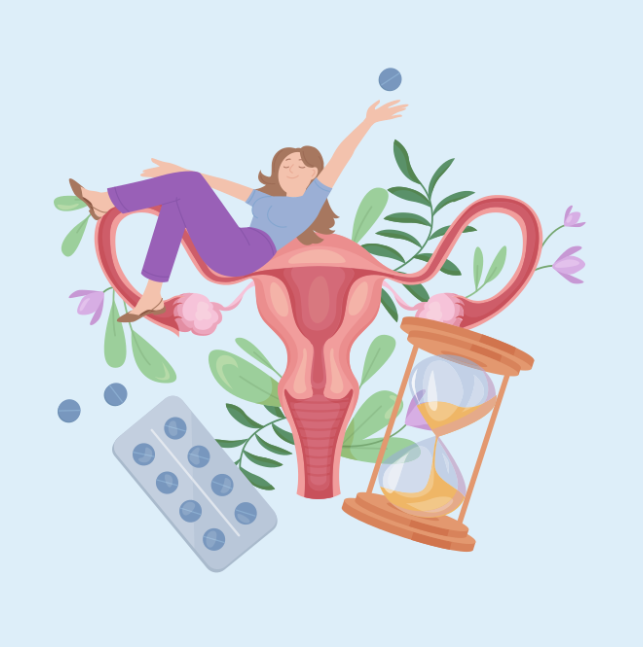
Timing: For some birth controls, you can start them before you even leave the hospital. For others, you may need to wait a few weeks to start.
Breastfeeding: While all methods are safe to use during breastfeeding, a few methods are not recommended during the first weeks of breastfeeding because there is a very small risk that they can affect your milk supply.
Effectiveness: The method you used before pregnancy may not be as effective postpartum. For example, the sponge and cervical cap are much less effective after you give birth.
Types of birth control and timing
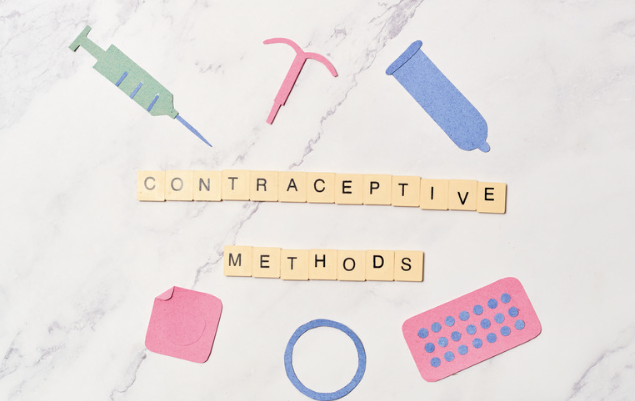
While you may already be familiar with the different types of birth control, here are a few options to consider and when you can resume them after pregnancy:
Combined Hormonal Methods
Some examples of these include, but are not limited to, the pill, ring, or the patch and can be started as early as 3 weeks after delivery. While some individuals may prefer an alternative due to potential hormonal side effects or the commitment of daily use, this is a viable option. If you are breastfeeding, be aware that the estrogen in these methods carries a small risk of affecting your milk supply, so it is recommended to wait 4 to 6 weeks until breastfeeding is well-established before starting.
Intrauterine devices (IUDs)
These can be inserted right after a vaginal or cesarean birth, and many people usually go back to their trusted IUD after pregnancy. It provides 3-8 years of protection, depending on the type you get. When inserted right after delivery, it is more common for the IUD to come out of the uterus. While this isn’t a serious complication, it can be inconvenient to go back to your provider to put it back in. To avoid this, hormonal IUDs are typically placed 4-6 weeks after pregnancy during postpartum visits. Regarding breastfeeding, Copper IUDs do not release any hormones and therefore do not affect milk production. On the other hand, whether progesterone IUDs should be used in breastfeeding mothers is debated among physicians. Occasionally, women who have received a progesterone IUD report decreased milk production following IUD placement. Despite this, it is important to remember that there are many reasons that breast milk production can slow or stop. It is best to talk to your physician regarding what is in your best interest.
The implant
This is a hormonal birth control device that is placed under the skin in your arm. It’s small and rod-shaped, and many women like it because they don’t need to think about taking a pill every day or even getting injections every three months. Similar to an IUD, the implant can be inserted immediately after birth and last up to 3 years. These implants provide highly effective contraceptive protection with no negative effect on breastfeeding or milk production.
Birth control injections
(Depo Provera) These can be given right after birth as well. This is where your health care professional will give you a shot in your arm or buttock every 3 months in order to prevent pregnancy. If you are breastfeeding, some health care providers suggest that you wait six weeks before getting the first Depo Provera shot. So, if you plan on breastfeeding, it is best to talk to your provider about when you can get your next injection.
Barrier methods
Condoms, diaphragms, sponge, and cervical caps are among the most common forms of birth control. These can be a great choice if you become sexually active again shortly after pregnancy, but are waiting to safely resume hormonal methods. Condoms can be used anytime after childbirth, and are safe to immediately resume. The cervical cap, diaphragm, and sponge can be used starting 6 weeks after childbirth, when the uterus and cervix have returned to normal size. If you used a diaphragm or cervical cap before childbirth, they should be refitted after childbirth. As mentioned before, the sponge and cervical cap are much less effective after you give birth.
Lactational Amenorrhea Method (LAM), or breastfeeding as birth control
LAM is a temporary form of contraception that is not discussed as often as other methods. Research has shown that exclusive breastfeeding can be 98–99.5% effective at preventing pregnancy when certain conditions are met: your baby is under six months old, your menstrual cycle has not returned, and your baby receives only breast milk (or very small amounts of other foods). Because ovulation must occur in order to become pregnant, breastfeeding can naturally delay the return of fertility for many women. However, every woman’s body and cycle are different. While some sources suggest nursing every 4–6 hours to help maintain infertility, this is an oversimplification. Fertility depends more on overall breastfeeding frequency, total time spent nursing in a 24-hour period, and how sensitive each woman’s body is to hormonal changes during lactation. Because of this, it is important to pay attention to and track your own cycle and bodily changes rather than relying solely on general timing recommendations. Some of the common ways to track your cycle include apps, ovulation test strips, basal body temperature, or the calendar method. For more information on how to track your cycle, visit Hopkins Medicine. Remember, you and your baby are unique! The effectiveness of LAM may decrease if breastfeeding frequency suddenly changes, if solids or formula are introduced, or if long periods of separation from the baby occur. While this method is natural and free, maintaining the frequent nursing schedule required can be physically demanding and may not be realistic for everyone. It is also important to remember that LAM is only considered reliable during the first six months postpartum and before the return of menstruation, making it a short-term birth control option.
Sterilization
On the other hand, sterilization is a permanent form of birth control, and one of the most effective (over 99% effective). There are 2 different types of sterilization: postpartum sterilization is done soon after delivery while you are still in the hospital, while laparoscopic sterilization can be done as a separate procedure several weeks after you have your baby. A vasectomy is also an option for a male partner, and is easier and safer to perform than female sterilization. If using this method, it is important to use another method of birth control for 2-4 months in order for the semen to be totally free of sperm. A sperm count is also needed to confirm that no sperm are present.
The bottom line:
Generally, most people wait a few weeks to resume hormonal methods, or longer if you are breastfeeding and concerned about how hormones may affect your breastmilk. As always, talk to your provider about resuming birth control after pregnancy and what would fit best with your lifestyle. For more information regarding different types of birth control, visit the website called Bedsider, where you can find and compare all the different methods and types of birth control.
References
American College of Obstetricians and Gynecologists. (n.d.). Postpartum birth control. https://www.acog.org/womens-health/faqs/postpartum-birth-control
Bedsider. (n.d.). Birth control methods. https://www.bedsider.org/birth-control
Chicago OBGYN. (n.d.). When to resume birth control after pregnancy. https://chicagoobgyn.com/when-to-resume-birth-control-after-pregnancy/
Hopkins Medicine. (n.d.). Calculating your monthly fertility window. Johns Hopkins Medicine. https://www.hopkinsmedicine.org/health/wellness-and-prevention/calculating-your-monthly-fertility-window
InfantRisk Center. (n.d.). IUD after delivery and breastfeeding. https://www.infantrisk.com/iud-after-delivery-and-breastfeeding
KellyMom. (n.d.). Lactational amenorrhea method (LAM) [PDF]. https://kellymom.com/store/handouts/newborn/LAM.pdf
Planned Parenthood. (n.d.). Breastfeeding and birth control. https://www.plannedparenthood.org/learn/birth-control/breastfeeding
Speroff, L., & Mishell, D. R., Jr (2008). The postpartum visit: it's time for a change in order to optimally initiate contraception. Contraception, 78(2), 90–98. https://doi.org/10.1016/j.contraception.2008.04.005
UNC Center for Maternal & Infant Health. (2016, February 18). Depo-Provera [PDF]. https://www.mombaby.org/wp-content/uploads/2016/03/Depo-Provera-2-18-16-3.pdf