

We all know how physically and emotionally taxing labor can be. In fact, some researchers have even made the comparison that laboring and giving birth take a similar amount of energy to running a marathon. So, staying nourished and hydrated during labor seems like it should be obvious, right? I mean, since when have you heard of an athlete performing at their highest level without the nutrients their bodies need? In reality, eating during labor has turned into a hot topic.
What are the body’s nutritional needs during labor?
When you think about labor, it's easy to focus on breathing techniques, contractions, and your birth plan. While these are all incredibly important, nutrition is another aspect to consider. Labor is physically demanding, and just like any hardworking muscle, your uterus needs energy to keep going.
The uterus is made primarily of muscle tissue. Throughout labor, those muscles contract repeatedly, requiring a steady source of fuel. While there is still limited research on the ideal nutrition for labor, studies in sports nutrition suggest that consuming carbohydrates during prolonged physical activity can improve endurance, reduce fatigue, and help prevent ketosis. Ketosis occurs when the body doesn't have enough carbohydrates available for energy and begins breaking down fat instead. When your body begins to burn fat instead of glucose, it can increase fatigue and sometimes slow labor progress. Eating or drinking can help maintain stamina, support uterine efficiency, and improve overall comfort during a long labor.
As mentioned before, giving birth has been compared to having similar energy demands as running a marathon. Since staying hydrated and nourished is a normal part of running a marathon, the same would ideally go for birthing. Although there isn't enough evidence to recommend one "perfect" labor food, research has looked at a variety of foods and drinks that may help provide energy during labor. These include:

Carbohydrate-rich drinks
Coconut water
Low-fat yogurt
Bread, toast, or crackers
Fresh fruits and vegetables
Soup
Fruit juice
Applesauce pouches
Electrolyte drinks
Chocolate
Hard-boiled eggs
Hopefully, we will one day have research on the best foods to fuel labor. Regardless of that research, food choices should ultimately be left up to the birthing person’s preferences and desires. It is worth mentioning, though, that throwing up is quite common during the birthing process. For this reason, you may want to stick with snacks and fluids that you won't mind seeing come back up again!
Why do some people say you can’t eat while in labor?
If you've taken a childbirth class or toured a hospital, you may have heard that once labor begins, you'll only be allowed ice chips or clear liquids. While this has been standard practice in many hospitals for decades, you might be surprised to learn that the recommendation has roots in childbirth practices from the 1940s, and modern research tells a much different story. To understand why hospitals adopted the "nothing by mouth" (NPO) policy, it helps to look back at what labor and birth looked like over 80 years ago.
During the 1940s, childbirth looked very different from what it does today. Many women were given a combination of medications known as “Twilight Sleep,” which included morphine and scopolamine. These medications were intended to reduce pain and erase memories of labor, leaving many women deeply sedated and unable to actively participate in the birth of their baby. Because patients were often unable to push effectively or follow instructions, forceps-assisted deliveries and routine episiotomies became common practice.
In many cases, especially during forceps deliveries and Cesarean births, general anesthesia was also administered, leaving the mother completely unconscious. Unlike the epidurals commonly used today, general anesthesia affects the entire body, including the reflexes that normally protect the airway. When a person is unconscious, they cannot cough or swallow normally if they vomit.
This created a serious concern known as aspiration. Aspiration occurs when stomach contents are vomited and accidentally enter the lungs instead of being swallowed into the stomach. This can lead to severe breathing problems, lung inflammation (called aspiration pneumonitis), infection, and, in rare cases, death.
Today, aspiration is much less common because anesthesia has improved dramatically. Modern anesthesiologists use advanced airway management techniques, including endotracheal intubation, to protect the airway during general anesthesia. However, these techniques were still in their infancy during the 1940s. At the time, doctors had limited equipment and less effective methods for keeping a patient's airway open and protected, making aspiration much more likely than it is today. Because of these risks, physicians began recommending that laboring patients avoid eating or drinking in case they required emergency general anesthesia, a recommendation that eventually became the standard "nothing by mouth" policy in hospitals for decades.
So how did “Nothing by Mouth” become the standard?

In 1946, Dr. Curtis Mendelson published a landmark study examining more than 44,000 births. He found that aspiration occurred in only 66 patients, roughly 1 in every 667 births. There were two deaths, both involving patients who had received general anesthesia without airway protection and had ingested solid food. Based on these findings, Mendelson recommended avoiding food and drink during labor whenever possible. His recommendations quickly became standard hospital practice, and the "nothing by mouth" policy remained in place for decades not just in the U.S., but worldwide as well. While it can sound scary that deaths have been caused by aspirations, the important thing to remember is that birth today looks very different than it did in 1946.
General anesthesia is now used in only a small percentage of births, usually during certain emergency Cesarean deliveries. Most people who need pain relief during labor receive an epidural or spinal anesthesia instead, allowing them to remain awake while avoiding many of the risks associated with general anesthesia. Airway management has also improved dramatically, making aspiration far less likely than it once was. This makes us wonder: if medical care has advanced since 80 years ago, is restricting food and fluids during labor still necessary for everyone?
What the research says:
Large studies from both the United States and the United Kingdom have found that aspiration during childbirth is extremely rare. One U.S. study estimated that death from aspiration occurred in approximately 1 out of every 1.4 million births. Other studies have shown that anesthesia-related deaths have continued to decline over time as modern anesthesia practices have become safer. Perhaps even more interesting, the United Kingdom changed its national guidelines in 2007 to encourage healthy, low-risk people in labor to drink fluids and eat light meals if they wished. Researchers closely monitored outcomes after the policy change and found no meaningful increase in aspiration cases. A national study of nearly 1.5 million pregnancies identified only nine confirmed cases of aspiration, and most occurred during general anesthesia or in people with other serious medical conditions, not because someone had eaten during labor. Research from freestanding birth centers tells a similar story. In one study of more than 11,800 low-risk births in 84 different birth centers, about 95% of laboring people ate or drank during labor, and not a single case of aspiration was reported. Professional organizations have also come out with their recommendations as well:
ACOG supports the use of clear liquids (such as water, electrolyte drinks, and juice) during labor for low-risk patients.
The World Health Organization recommends allowing women to eat and drink as desired during labor, emphasizing comfort, autonomy, and physiologic birth.
What does all of this mean?
Because of the growing body of evidence, many professional organizations now recommend a more individualized approach. Healthy, low-risk laboring people are generally encouraged to stay hydrated with clear fluids, and in some cases, light, easily digested foods may also be appropriate. However, people with certain medical conditions or those at a higher risk of needing emergency surgery may still be advised to avoid eating. Ultimately, your healthcare provider and birth setting will determine what policies are in place, but it's worth having a conversation about your options before labor begins. Understanding where these recommendations came from and how childbirth has changed over the past several decades can help you make informed decisions and advocate for the birth experience that's right for you.
Advocating for yourself in the hospital
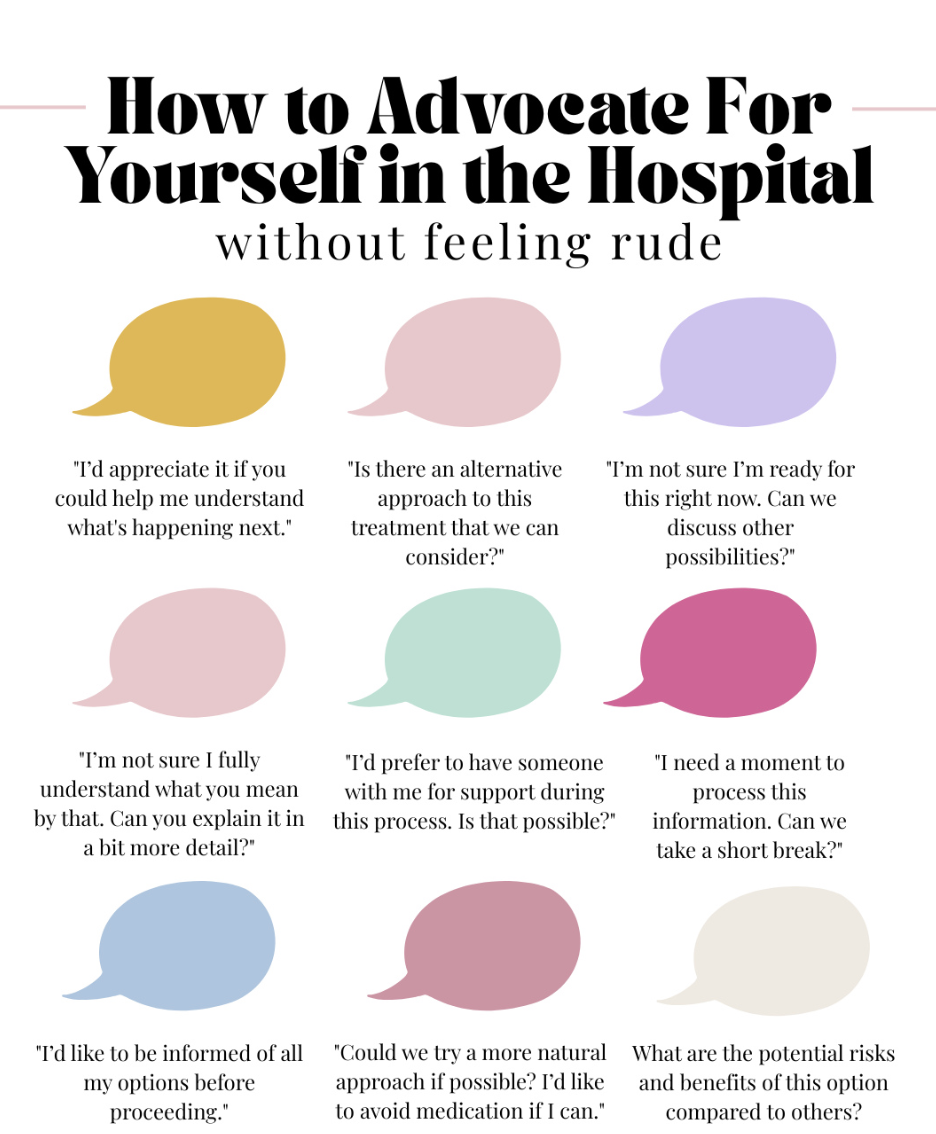
While the original research that led to restrictive hospital policies is now considered outdated, many hospitals still maintain limitations on eating and drinking during labor. Fortunately, preparation and calm advocacy can go a long way. Before your due date, ask your provider about your hospital's policy regarding food and fluids during labor. If staying nourished is important to you, include it in your birth plan so your care team is aware of your preferences ahead of time.
If questions or pushback arise, a respectful conversation is often all that's needed. You might say:
"I'm low-risk, and I understand that current guidance from organizations like the World Health Organization supports eating and drinking during labor for uncomplicated pregnancies. I feel better when I'm able to stay nourished. Is there a medical reason why you recommend a different approach for me?"
This gives your provider a chance to explain whether an individual medical concern, such as the need for general anesthesia or another complication, would make restricting food or fluids appropriate. Remember, hospital policies are not the same as laws. Patients have the right to informed consent, which includes the right to ask questions, understand the benefits and risks of different options, and make decisions about their own care. Advocacy doesn't have to be confrontational; it's about having respectful, informed conversations with your healthcare team so your care aligns with both the best available evidence and your individual circumstances.
At High Country Doulas, we're here to help you prepare for those conversations, understand your options, and feel confident advocating for the birth experience that's right for you.
References
American College of Obstetricians and Gynecologists. (2019, February). Approaches to limit intervention during labor and birth (Committee Opinion No. 766). https://www.acog.org/clinical/clinical-guidance/committee-opinion/articles/2019/02/approaches-to-limit-intervention-during-labor-and-birth
Care in normal birth: a practical guide. Technical Working Group, World Health Organization. (1997). Birth (Berkeley, Calif.), 24(2), 121–123.
Elgin Doula. (n.d.). Eating and drinking in labor. https://www.elgindoula.com/blog/eatinganddrinkinginlabor
Evidence Based Birth. (2024). Evidence on: Eating and drinking during labor. https://evidencebasedbirth.com/evidence-eating-drinking-labor/
Pittsburgh Birth Services. (2024, September 11). Your guide to eating and drinking during labor. https://www.pittsburghbirthservices.com/blog/your-guide-to-eating-and-drinking-during-labor