
Doulas Support Epidural Births Too
There’s a common misconception that lingers about birth. “Doulas are only for unmedicated, natural births”. You may have heard something similar. Like if you’re planning an epidural, or if your plans change along the way, a doula somehow becomes unnecessary. We want to fervently reassure you: that’s simply not the case. Your birth experience is not defined by whether or not you receive pain medication. Support doesn’t become less important just because you choose an epidural. As doulas, our role is not to guide you toward a specific kind of birth. Our role is to support you, no matter what path your labor takes.

Pain Relief and Support Are Not Opposites
Choosing an epidural is a common and often helpful decision. Many people feel a sense of relief, rest, and renewed energy after receiving one. Even with an epidural, you may still feel: uncertainty about what’s happening next, vulnerability in a medical environment, you may not have complete relief from your epidural, or tons of other possibilities. An epidural can ease the physical intensity of labor when it works well, but it doesn’t change the many emotions birth can bring. That’s where a doula can help by quietly grounding the space, helping you feel relaxed, helping to reassure your partner, and reminding you that you’re not alone in the process.
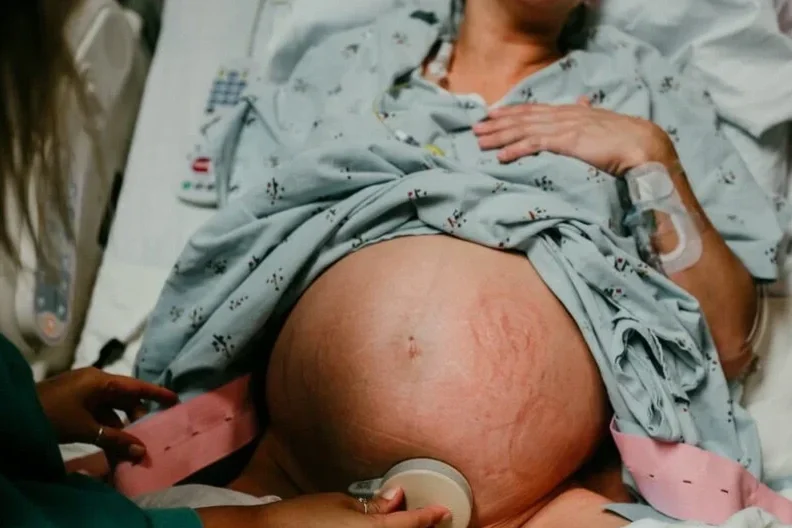
So What Does a Doula Do During an Epidural Birth?
Before the Epidural
Labor doesn’t pause while decisions are being made. A doula helps you prepare, emotionally and physically, for what’s to come. That might look like:
Talking you through options while understanding your preferences
Helping you communicate with your care team
Offering techniques to aid in labor progress and comfort
Supporting your partner so they feel confident and involved
During Placement
Getting an epidural can feel intimidating. You may be asked to stay very still during contractions while a lot is happening around you. A doula can:
Help you focus your breathing
Offer reassurance in staying relaxed
Support your body positioning
Talk you through each step to help keep you informed
After the Epidural
This is the part many people don’t expect: support doesn’t stop, it shifts. Even with an epidural, a doula can help with:
Position changes that support labor progression
Using tools to encourage optimal positioning and progression
Comfort care: adjusting pillows, managing shaking, breakthrough spots, helping with dry mouth, or temperature changes
Creating a calm, relaxed environment in the room
Celebrating your “birthing” day!
Offering emotional reassurance
Helping you understand what’s happening as labor progresses
Giving you space to process and ask questions
During Pushing and Decision Moments
As birth approaches, things can feel intense. A doula continues to give support by: offering encouragement, helping you stay focused and present, supporting communication with your care team, and giving you the space to make informed choices. Sometimes it’s as simple as a quiet reminder: “You’re doing great! You’ve got this one step at a time.”

A Balanced View
A Doula’s Perspective on Epidural Support
Parker Chakales, High Country Doulas
“Support doesn’t stop when an epidural begins, it simply shifts. Before the epidural, support is all about calming fears and walking through the process. After placement, it becomes a time to rest, reset, and prepare for what’s next. As labor continues, sensations may change, but having a doula there provides reassurance, answers, and guidance. No matter how birth unfolds, doulas offer constant support. Fear can often fade once it’s in place, allowing excitement to take over. If things don’t go as planned, doulas adjust, continuing to support both physically and emotionally every step of the way”.
A Clients Experience on Using an Epidural
Liz W. , High Country Doulas’ Client
“I had such a great experience, and my doula made all the difference. Although an epidural wasn’t part of my original birth plan, a long labor led me to reconsider. Having someone there to explain everything helped me realize I wasn’t giving up control and that I still had a choice. My doula helped me feel strong and supported me every step of the way. Even after the epidural, care didn’t stop. My doula continued using holistic techniques and self-care to keep things progressing, and having a familiar face brought so much comfort. The best part was finally being able to relax after an intense labor, while still feeling a sense of control. My doula reminded me this was my decision and helped me keep a clear mind through it all. Having a doula doesn’t become less valuable if your plan changes, it becomes even more important. From home to hospital and back home again, that constant support meant everything.”
A Doula’s Perspective on Epidurals
Ciara Larkins, High Country Doulas
“A doula is like a tour guide through birth. We're there to help you feel informed, supported, and never alone. When it comes to epidurals, my approach is rooted in reassurance. There’s no shame. Do what’s right for your body and your baby. Doulas can help you stay in your “birthing bubble”: a calm, open mindset where you feel safe and supported. After an epidural, my focus shifts to restoring the environment by creating a peaceful, relaxing space while continuing to advocate for my client. Information is power, especially during recovery, where understanding your body helps ease the transition. My biggest message is, “Plans can change, and that’s okay. Birth is about feeling supported, informed, and empowered every step of the way.”

Closing Thoughts
If you’re planning an epidural or just keeping it as an option, a doula improves your experience regardless of how you give birth. High Country Doulas don’t support just one type of birth. We support people and experience. Whether your labor is medicated, unmedicated, or somewhere in between, you deserve to feel relaxed, cared for, and fully supported every step of the way.
References
Bohren, M. A., et al. Continuous support for women during childbirth (Cochrane Review).
American College of Obstetricians and Gynecologists (ACOG) – Approaches to Limit Intervention During Labor and Birth
Hodnett, E. D., et al. (JAMA). Continuous support during labor and childbirth
BMJ (2024). Association between epidural analgesia and severe maternal morbidity